
Diet Culture Trends That Hurt Your Digestion

So many of us are looking for ways to feel healthier, look better, have more energy, and optimize our bodies. The problem? The health and wellness world is saturated with trends promising to help us get there faster.
Detox. Fast for more hours. Cut carbs. Eat everything raw. Track every macro. Choose fat-free. Add more protein. Take another supplement.
While these trends are often marketed in the name of “health,” they can sometimes leave people feeling more frustrated with their bodies, their digestion, and themselves.
One of the biggest things I teach my clients is that health doesn’t have to be extreme. Your body generally responds much better to adequate nourishment, consistency, variety, and supportive daily habits than it does to the latest wellness trend. When we support gut health, we’re supporting so much more than digestion.
Your gut health influences your entire body, including:
How we break down and absorb nutrients from the foods we eat
Elimination and detoxification of waste products like toxins, chemicals, and excess hormones
Immune function, with 70% of our immune system living in the gut
Mood and the nervous system through communication along the gut-brain axis
Hormone metabolism
Skin health
Energy and overall wellbeing
The relationship between the gastrointestinal tract, nervous system, immune system, and brain is increasingly recognized as an important component of whole-body health (Ballou & Feingold, 2022; Ross et al., 2024).
This is why I don’t look at digestive symptoms as something happening in isolation. When someone comes to me with bloating or constipation, we’re not just talking about their bowel movements. We’re looking at the bigger picture:
Are they adequately breaking down their food?
Are they absorbing their nutrients?
Are they eliminating regularly?
What does their diet look like?
How are they sleeping?
What is their stress level?
When you prioritize your health through the lens of gut health, you’re creating a stronger foundation for the rest of the body.
My goal is to help you cut through some of the noise of diet culture so you can feel educated, empowered, and more confident in the choices you make for your body.
Let’s start with one of the wellness industry’s favorites: the detox.
Juice Cleanses and Detoxes
When I lived in Charleston, I worked at a holistic supplement and wellness store that also had a juice bar. Almost every day, I watched people come in to order three-, five-, or even seven-day juice cleanses.
For days, they would live on several bottles of juice and maybe an herbal tea at night.
The goal?
“I just need to detox.”
“I want to reset my body.”
“I need to clean everything out.”
I completely understand why this sounds appealing. A few days of colorful organic juices packaged together as a “reset” feels healthy.
But here’s the thing I wish more people understood: Your body already has a detoxification system.
Your liver continually processes substances so they can be safely used or eliminated. Your kidneys filter your blood and remove waste through urine. Your gastrointestinal tract and stool provide another major route of elimination, while your lungs and skin also participate in the body’s normal elimination processes (Klein & Kiat, 2015).
Your job isn’t to periodically “detox” your body. Your job is to give those systems the nutrients and support they need to do their jobs every day– and that’s where juice cleanses can miss the mark.
Juicing Removes Most of the Fiber
When you juice fruits and vegetables, you’re separating much of the fiber from the liquid. Fiber isn’t just something we eat to poop. Certain fibers provide fuel for beneficial gut microbes, help support bowel regularity, contribute to satiety, and can help slow the absorption of carbohydrates (Reynolds et al., 2019; Ross et al., 2024).
Compare drinking an apple juice with eating an apple. The whole apple requires chewing, contains its natural fiber, and generally produces a different digestive and blood-sugar response than drinking its juice. If you’re trying to support your gut, removing fiber for several days isn’t necessarily the “reset” it sounds like.
You’re Getting Carbohydrates Without Much Protein or Fat
Fruit and vegetable juices can provide vitamins, minerals, and plant compounds—but they’re typically low in protein and fat. Your body needs all three macronutrients.
Amino acids from dietary protein are involved in many of the liver’s normal metabolic and detoxification pathways. Dietary fat is necessary for the absorption of fat-soluble nutrients and stimulates normal bile release, while bile also provides one route through which certain compounds are ultimately eliminated through the digestive tract.
This is why I would much rather see someone eat a nourishing meal with protein, fiber-rich carbohydrates, colorful plants, and healthy fats than drink six juices and call it a detox.
And That Quick Weight Loss?
If the scale drops dramatically after a few days of consuming very few calories, that doesn’t mean you’ve suddenly lost several pounds of body fat.
Short-term changes on the scale can reflect changes in water, glycogen stores, sodium intake, and the amount of food moving through your gastrointestinal tract (Klein & Kiat, 2015).
Once you return to your normal eating pattern, much of that weight may return.
So if you genuinely love a green juice? Have one. Enjoy it alongside a balanced meal or snack. It can be a convenient way to add additional fruits, vegetables, and phytonutrients to your day. But you don’t need to live on juice for five days to “cleanse” your body.
The takeaway: Your body doesn’t need a detox. It needs the nutrients required to support the detoxification systems it already has.

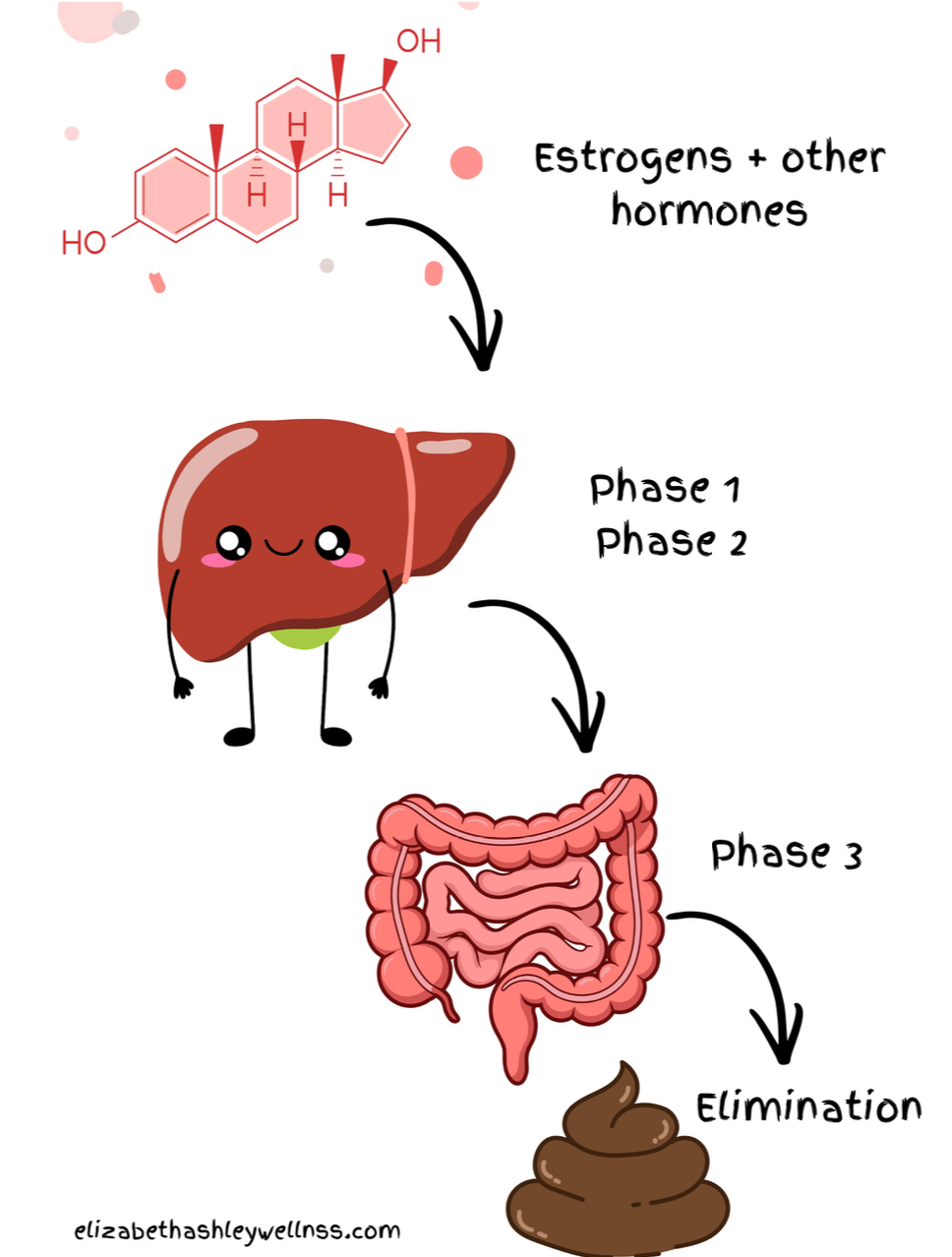
Photo retrieved from: https://boisenaturalhealth.com/how-the-liver-detoxifies/
This diagram reflects the different phases of liver detoxification. As noted in the picture, you can see the vast variety of nutrients needed to properly support the liver in detoxifying. We don’t get all of these nutrients from juice.
Raw Food Obsession
Smoothies, giant salads, raw vegetables—it’s easy to assume that the more raw, colorful food you eat, the healthier your diet is. While raw fruits and vegetables can absolutely be part of a healthy diet, more isn’t always better—especially when your digestion is already struggling.
Cooking actually begins part of the digestive process for us. Heat softens plant fibers and changes the structure of certain foods, which can make them easier to chew and digest.
If you already struggle with bloating, sluggish digestion, or feeling uncomfortably full after meals, a massive bowl of raw kale and cruciferous vegetables may not be what your gut needs at that moment.
I like to think about this as meeting your digestive system where it is. Sometimes a warm bowl with roasted vegetables, rice, protein, and olive oil is going to feel much better than another cold smoothie or enormous salad.
This doesn’t mean raw foods are bad. It simply means that how you prepare food matters, too. Aim for a balance of raw and cooked foods and, most importantly, pay attention to how your body responds.
The takeaway: You don’t get extra health points for eating everything raw. Preparation matters, too.
Cutting Out Entire Food Groups
Food elimination absolutely has its place, particularly with diagnosed allergies, intolerances, or a strategically designed therapeutic diet. The problem is when temporary restriction turns into a lifestyle.
I frequently see clients who began removing foods because they weren't feeling well. They cut out gluten. Then dairy. Then high-histamine foods. Then FODMAPs. Before they know it, they're rotating through the same five or ten “safe” foods and are terrified to eat anything else.
While removing a triggering food may temporarily reduce symptoms, restriction doesn't necessarily tell us why the food became problematic in the first place.
Long-term over-restriction can make it harder to meet your nutrient needs and may reduce the variety of fibers and plant compounds available to your gut microbiome. A diverse diet generally provides a broader range of substrates for the microorganisms living in your gut (Ross et al., 2024; Zhang et al., 2018).
Instead of continuously asking, “What else should I remove?”
I encourage clients to start asking, “Why am I reacting to so many foods?”
Depending on the person, we may need to look at digestive capacity, gut motility, the microbiome, immune activation, meal habits, stress, food preparation, or intestinal barrier function.
The long-term goal shouldn't be to create an increasingly tiny list of foods you tolerate. The goal is to build a body and digestive system that can comfortably handle as much dietary variety as possible.
The takeaway: Restriction can be a useful short-term tool, but it shouldn’t be the end goal. Instead of constantly removing foods, get curious about why your body is reacting and work toward rebuilding tolerance, nourishment, and dietary variety.
Protein Overloading – Bars & Shakes
Let me start by saying: I love protein.
Protein provides amino acids needed throughout the body and plays an important role in satiety, muscle maintenance, tissue repair, and overall health. Protein-containing meals also participate in normal digestive signaling, including gastric acid and enzyme secretion (Brooks, 1985).
But diet culture has taken protein and turned it into a personality.
Protein bars. Protein shakes. Protein cookies. Protein chips. Protein cereal. Protein coffee.
Suddenly, we're so focused on hitting a number that we've forgotten about the rest of the meal.
If most of your protein comes from ultra-processed convenience foods, you may be missing the fiber, healthy fats, micronutrients, and plant diversity that also support digestive health. Many protein products also contain gums, sugar alcohols, fibers, or sweeteners that some people find particularly bloating.
Dietary fiber and other plant-derived carbohydrates provide important substrates for the gut microbiome, reinforcing why protein shouldn’t crowd plant foods off the plate (Reynolds et al., 2019; Ross et al., 2024).
Instead, build your meals around whole-food protein + fiber-rich carbohydrates + healthy fats + colorful plants.
Protein matters. But so does everything you eat alongside it.
The takeaway: Protein is important, but more isn’t always better. Prioritize whole-food protein sources and remember that a healthy gut needs more than protein—it also thrives on fiber, healthy fats, colorful plants, and dietary variety.
Low-Fat Diets
We aren't living in the fat-free 1990s anymore—and your salad doesn't need to be afraid of olive oil.
Dietary fat is essential. It helps us absorb the fat-soluble vitamins A, D, E, and K, contributes to satiety, provides essential fatty acids, and stimulates digestive processes involved in fat digestion, including bile release.
This is one reason I don't love seeing someone eat a giant bowl of raw vegetables with fat-free dressing and call it lunch. Not only might they be hungry again shortly afterward, but adding some fat can also improve the absorption of certain fat-soluble nutrients and plant compounds.
Some of my favorite whole-food fat sources include:
Extra-virgin olive oil
Avocado
Walnuts and other nuts
Seeds
Olives
Fatty fish
You don't need unlimited amounts of fat, and the type of fat still matters. But healthy fats belong in a balanced diet—and your digestive system knows what to do with them.
The takeaway: Don’t fear fat—focus on quality. Including whole-food sources of healthy fats helps you feel satisfied, absorb important nutrients, and support normal digestive function.
Skipping Meals / Fasting Extremes
Fasting has become incredibly popular, but longer isn't automatically better.
Your digestive system operates according to rhythms. Eating triggers coordinated responses involving stomach acid, digestive enzymes, bile, intestinal movement, and hormones that help regulate hunger and fullness (St-Onge et al., 2017).
Eating can also stimulate the gastrocolic reflex, which is one reason some people notice the urge to have a bowel movement after breakfast.
Interestingly, constantly grazing isn't necessarily ideal either.
Between meals, the small intestine has a housekeeping pattern called the migrating motor complex (MMC). Think of it like a clean-up crew that helps move residual material through the upper digestive tract during fasting periods between meals.This motor pattern occurs during fasting and is disrupted when food is consumed (Deloose et al., 2012).
For many people, eating balanced meals and leaving a few hours between them can provide a happy middle ground between constantly snacking and excessively fasting.
Rather than forcing yourself into a rigid fasting window because the internet told you to, pay attention to your hunger, energy, sleep, activity level, hormones, and digestive function.
The takeaway: Your gut thrives on rhythm, not extremes. Aim for balanced, satisfying meals with enough time between them to support digestion and the MMC—without constantly grazing or forcing yourself into overly restrictive fasting windows.
“Sugar-Free” Products
Sugar-free does not automatically mean gut-friendly.
One of the first things I look at when someone tells me a protein bar, snack, or “healthy” dessert makes them painfully bloated is the ingredient list.
Sugar alcohols such as sorbitol, maltitol, and xylitol can be poorly absorbed in the digestive tract and may cause gas, bloating, cramping, or diarrhea—especially in sensitive individuals or when consumed in larger amounts. Some alternative sweeteners and added fibers may also bother certain people (Mäkinen, 2016).
This doesn't mean everyone needs to avoid every sugar substitute. It means you should stop assuming a product is healthier simply because the front of the package says zero sugar.
Sometimes the simpler option is the better option. Fruit, berries, dates, or a small amount of honey or maple syrup can be perfectly reasonable ways to add sweetness depending on your individual needs.
The takeaway: Don’t let “sugar-free” marketing fool you. Read the ingredient list, pay attention to how your gut responds, and remember that sometimes a little real sugar is better tolerated than a long list of artificial sweeteners and sugar alcohols.
Drinking Tons of Water to Feel Full
I once worked with a client who would chug glasses of water before and during his meals because he had learned that it would help him feel full and eat less. I understood the thought process—but I wanted him to stop trying to trick his body out of being hungry. Hydration is essential for digestion and healthy bowel movements. But you don't need to fill your stomach with water to suppress your appetite.
For some people, consuming large amounts of fluid with meals can also create uncomfortable fullness, bloating, or reflux. Drinking too much with meals may also dilute stomach acid, creating a less acidic environment which can make it harder to digest. Rather than saving all your hydration for mealtime, sip fluids consistently throughout the day and drink normally with meals according to thirst.
The takeaway: Hydrate throughout the day instead of using water as a tool to suppress hunger. Give your stomach the space and acidic environment it needs to digest your meal efficiently.
Eating Too Fast
This is one of the simplest—and most overlooked—digestive interventions.
We live in a world that glorifies being busy. We eat breakfast standing at the counter, lunch in front of a computer, snacks in the car, and dinner while scrolling through our phones.
But digestion doesn't begin in your stomach.
It begins before you swallow your first bite. Seeing and smelling food, salivating, chewing, and anticipating a meal all help prepare your digestive system for what's coming.
Your autonomic nervous system matters too. Digestion is supported when your body can shift toward a parasympathetic, or “rest and digest,” state. If you're answering emails, arguing on the phone, driving, or inhaling your meal in six minutes, you're creating a very different eating environment (Ballou & Feingold, 2022).
Try putting your fork down between bites. Chew your food. Sit at a table. Take a few slow breaths before eating. Give yourself 15–20 minutes when possible instead of treating your meal like another task to complete.
Because sometimes improving digestion isn't about changing what you're eating.
It's about changing how you're eating.
The takeaway: Slow down and give your body a chance to prepare for and participate in digestion. Sometimes supporting your gut isn’t about changing what’s on your plate—it’s about creating the right environment to digest it.
Fear of Salt
Salt has been demonized for years, but sodium is an essential electrolyte—not something the body is designed to live without.
Sodium plays important roles in fluid balance, nerve signaling, muscle function, and nutrient transport. Chloride, the other component of sodium chloride, is also used by the body to produce hydrochloric acid in the stomach, which is essential for normal digestion.
That doesn’t mean everyone should start pouring unlimited salt onto their food. Sodium needs vary based on the individual, and some people—particularly those with certain cardiovascular or kidney conditions—may need to be more mindful of their intake.
Quality and context matter, too. Most of the sodium in the typical American diet comes from packaged, prepared, and restaurant foods—not from the pinch of salt you add to a home-cooked meal. Rather than fearing salt altogether, focus on reducing heavily processed foods and using salt intentionally to season nutrient-dense, whole-food meals.
When choosing salt at home, I prefer a minimally processed sea salt or mineral salt with a simple ingredient list. My favorites include Celtic sea aalt, Maldon sea salt and Pink Himalayan salt.
The takeaway: You don’t need to fear the salt shaker. Focus on the quality of your overall diet, use salt intentionally, and remember that an essential mineral isn’t inherently unhealthy simply because diet culture told us to fear it.
Low-Calorie, High-Volume Eating
We've all seen the videos: “Look at this HUGE bowl of food for only 300 calories!”
At first glance, it sounds like a win. More food for fewer calories.
But your body doesn't just need your stomach to be physically full. It needs energy and nutrients.
Constantly building enormous meals around very low-calorie foods can leave you physically stuffed but physiologically undernourished. And if those meals contain huge amounts of raw vegetables or fermentable fibers, some people may experience more bloating, gas, abdominal pressure, or discomfort.
Fiber is incredibly important for gut health—but more is not always better, especially when digestive function is already compromised (Reynolds et al., 2019).
Instead of asking, “How much food can I eat for the fewest calories?”
Try asking: “How can I make this meal genuinely nourishing and satisfying?”
A balanced meal might include protein, a quality carbohydrate, colorful vegetables, and a healthy fat. You don't need to fill an enormous mixing bowl with lettuce to prove you're eating healthy.
The Takeaway: Nourishment isn't about maximizing volume. It's about providing the quality and quantity of fuel your body needs.
Following Your Macros, Not Your Body
Macro tracking can be an incredibly useful tool.
It can teach you what 30 grams of protein actually looks like, help you recognize that you're barely eating carbohydrates, or show you that your “healthy” diet isn't providing nearly enough food.
But macros should be information—not law.
If you're starving but refuse to eat because you've “hit your macros,” that's a problem. If you're painfully full but force down another protein shake because an app says you need 25 more grams of protein, that's also a problem.
Hunger, fullness, cravings, satisfaction, energy, bowel movements, sleep, and performance are all forms of feedback.
Rigid tracking can also make eating unnecessarily stressful. And stress itself can affect gastrointestinal function, appetite, motility, and how we experience digestive symptoms (Ballou & Feingold, 2022).
Use tracking as a tool to build awareness, not as a replacement for body awareness.
Ultimately, the goal is to understand your body's signals well enough that an app doesn't have to make every food decision for you.
The takeaway: Use macros as a guide, not a rulebook. Numbers can help you build awareness, but long-term health also means learning to trust your body’s cues for hunger, fullness, satisfaction, energy, and nourishment.
Taking Supplements Blindly
When a new client shares their supplement routine with me, I almost always ask two questions:
Why are you taking this?
And how does it make you feel?
You'd be surprised how often the answer is, “I'm actually not sure.”
We've created this idea that supplements are automatically healthy because they're sold in a wellness store or recommended by someone online.
But supplements are biologically active. More isn't always better.
Some of the most common issues I see include:
Taking Too Much
Certain nutrients can cause unwanted digestive effects at higher doses. Supplemental magnesium, for example, can cause loose stools depending on the form and amount. Higher doses of vitamin C can do the same. Iron supplements commonly cause gastrointestinal symptoms such as nausea, constipation, or abdominal discomfort.
And nutrients interact with one another. Taking large amounts of an individual nutrient for long periods isn't always harmless. Mineral intake can also interact with the intestinal environment and microbiome, which is one reason supplementation should be individualized rather than approached with a “more is better” mentality (Cheng et al., 2024).
Taking Supplements at the Wrong Time
Timing can influence both absorption and tolerance.
Fat-soluble vitamins—A, D, E, and K—are generally better absorbed alongside dietary fat. Iron absorption can be affected by other foods, beverages, and supplements, while taking iron on an empty stomach may cause nausea for some people.
Digestive-support supplements also need to be used thoughtfully. Products such as digestive enzymes or betaine HCl aren't appropriate for everyone simply because they're marketed for “gut health.”
Taking Something Your Body Doesn't Need
This is where personalization becomes important.
A probiotic that makes one person feel amazing may leave another person bloated. A supplement protocol that makes sense based on one person's diet, symptoms, medications, and lab work may make absolutely no sense for someone else.
Testing can sometimes provide useful information, but it should be interpreted alongside your symptoms, health history, diet, medications, and overall clinical picture—not used as an excuse to create a 20-supplement protocol.
And remember: supplements are supplemental.
Before building an overflowing supplement cabinet, look at the foundation:
Are you eating enough?
Are you eating a variety of whole foods?
Are you getting adequate protein, carbohydrates, fats, and fiber?
Are you sleeping?
Are you moving your body?
Are you managing stress?
Are you actually digesting your meals well?
No supplement can replace those foundations.
Diet culture loves extremes because extremes are easy to market.
Never eat this.
Always eat that.
Fast for this many hours.
Hit this exact number.
Take these five supplements.
Real health is rarely that simple—and that's actually a good thing.
Your body isn't something you need to constantly hack, restrict, cleanse, or outsmart. It's something you need to learn how to support.
True gut health isn't built through a seven-day detox or the newest wellness trend. It's built through the seemingly boring things we do consistently: eating enough food, prioritizing whole foods, getting adequate protein and fiber, including healthy fats and carbohydrates, chewing our food, eating in a calmer environment, moving our bodies, sleeping, hydrating, and giving our digestive system the support it needs.
Most importantly, pay attention to your body's feedback.
Bloating, constipation, diarrhea, reflux, excessive gas, and constantly reacting to foods aren't signals that you need to become more restrictive. They're signals worth getting curious about.
Instead of asking, “What else should I cut out?”
Start asking, “What does my body need more support with?”
That's the shift I want more people to make.
You don't need another set of food rules. You need the tools to understand your own body.
When you stop chasing every new diet trend and start building strong foundations, you're not just supporting your digestion—you're creating a way of eating that can actually support your health for the long run.
References
Ballou, S., & Feingold, J. H. (2022). Stress, resilience, and the brain-gut axis: Why is psychogastroenterology important for all digestive disorders? Gastroenterology Clinics of North America, 51(4), 697–709. https://doi.org/10.1016/j.gtc.2022.07.001
Brooks, F. P. (1985). Effect of diet on gastric secretion. The American Journal of Clinical Nutrition, 42(5 Suppl), 1006–1019. https://doi.org/10.1093/ajcn/42.5.1006
Cheng, J., Kolba, N., & Tako, E. (2024). The effect of dietary zinc and zinc physiological status on the composition of the gut microbiome in vivo. Critical Reviews in Food Science and Nutrition, 64(18), 6432–6451. https://doi.org/10.1080/10408398.2023.2169857
Deloose, E., Janssen, P., Depoortere, I., & Tack, J. (2012). The migrating motor complex: Control mechanisms and its role in health and disease. Nature Reviews Gastroenterology & Hepatology, 9(5), 271–285. https://doi.org/10.1038/nrgastro.2012.57
Herbst-Kralovetz, M. M., Pyles, R. B., Ratner, A. J., Sycuro, L. K., & Mitchell, C. (2016). New systems for studying intercellular interactions in bacterial vaginosis. The Journal of Infectious Diseases, 214(Suppl 1), S6–S13.
Klein, A. V., & Kiat, H. (2015). Detox diets for toxin elimination and weight management: A critical review of the evidence. Journal of Human Nutrition and Dietetics, 28(6), 675–686. https://doi.org/10.1111/jhn.12286
Mäkinen, K. K. (2016). Gastrointestinal disturbances associated with the consumption of sugar alcohols with special consideration of xylitol: Scientific review and instructions for dentists and other health-care professionals. International Journal of Dentistry, 2016, 5967907. https://doi.org/10.1155/2016/5967907
Reynolds, A., Mann, J., Cummings, J., Winter, N., Mete, E., & Te Morenga, L. (2019). Carbohydrate quality and human health: A series of systematic reviews and meta-analyses. The Lancet, 393(10170), 434–445. https://doi.org/10.1016/S0140-6736(18)31809-9
Ross, F. C., Patangia, D., Grimaud, G., Lavelle, A., Dempsey, E. M., Ross, R. P., & Stanton, C. (2024). The interplay between diet and the gut microbiome: Implications for health and disease. Nature Reviews Microbiology, 22, 671–686. https://doi.org/10.1038/s41579-024-01068-4
St-Onge, M.-P., Ard, J., Baskin, M. L., Chiuve, S. E., Johnson, H. M., Kris-Etherton, P., & Varady, K. (2017). Meal timing and frequency: Implications for cardiovascular disease prevention: A scientific statement from the American Heart Association. Circulation, 135(9), e96–e121. https://doi.org/10.1161/CIR.0000000000000476
Yao, Y., Tan, P., & Kim, J. E. (2022). Effects of dietary fats on the bioaccessibility and bioavailability of carotenoids: A systematic review and meta-analysis of in vitro studies and randomized controlled trials. Nutrition Reviews, 80(4), 741–761. https://doi.org/10.1093/nutrit/nuab098
Zhang, N., Ju, Z., & Zuo, T. (2018). Time for food: The impact of diet on gut microbiota and human health. Nutrition, 51–52, 80–85.


Comments